Is Assignment-Based Placement a Fit for Your Furnished Property?
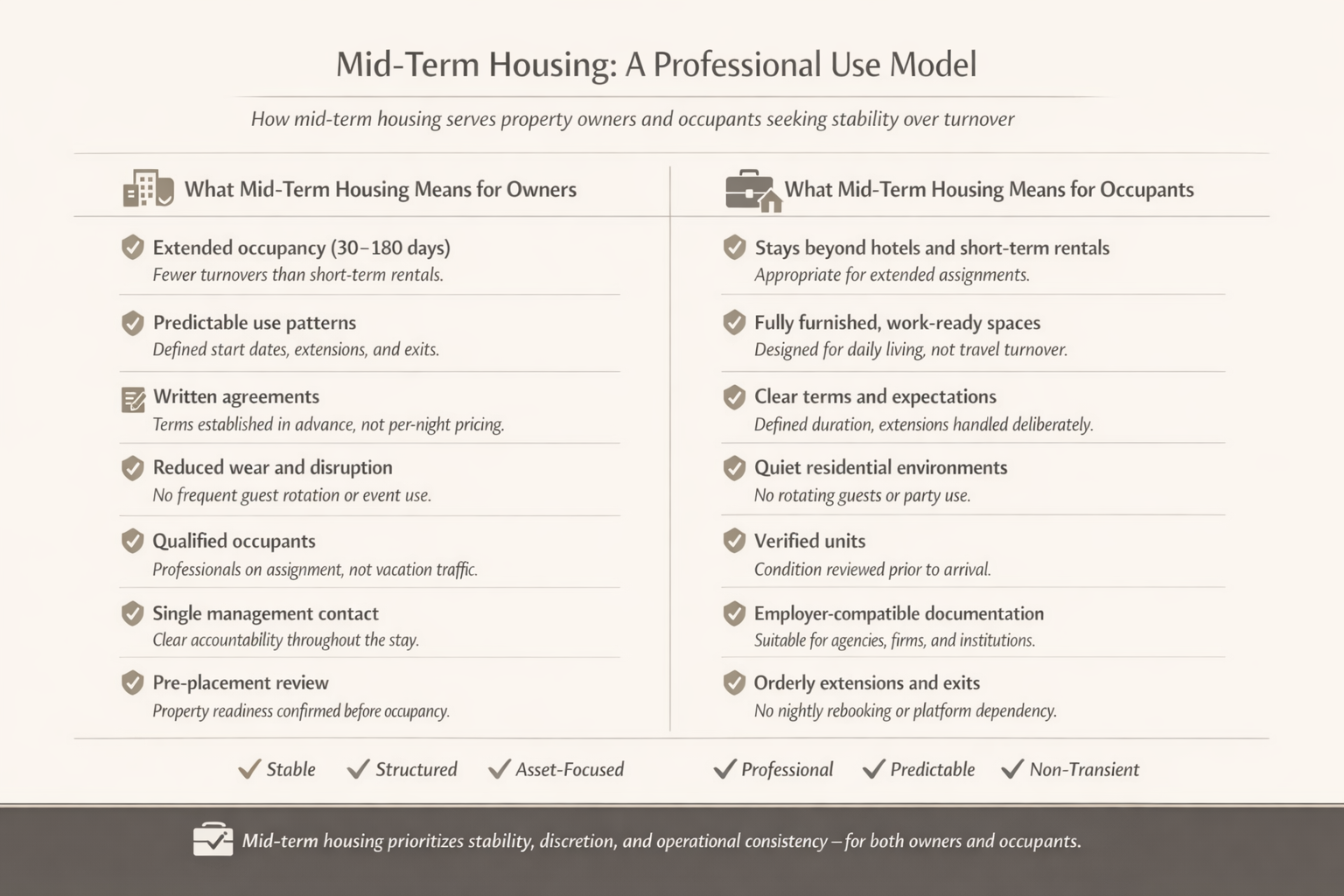
This page is for property owners evaluating whether a furnished residence is suitable for professionally managed, assignment-based placement. This model is built for owners who prioritize stable occupancy, defined use, and asset protection—not high turnover or transient traffic.
Assignment-based placement supports non-transient residential use for extended professional or institutional stays. Properties operate under written standards, with documented start and end dates, controlled occupancy parameters, and deliberate handling of extensions—rather than open-ended arrangements or short-stay use.
Properties Well-Suited for Furnished Assignment-Based Placement
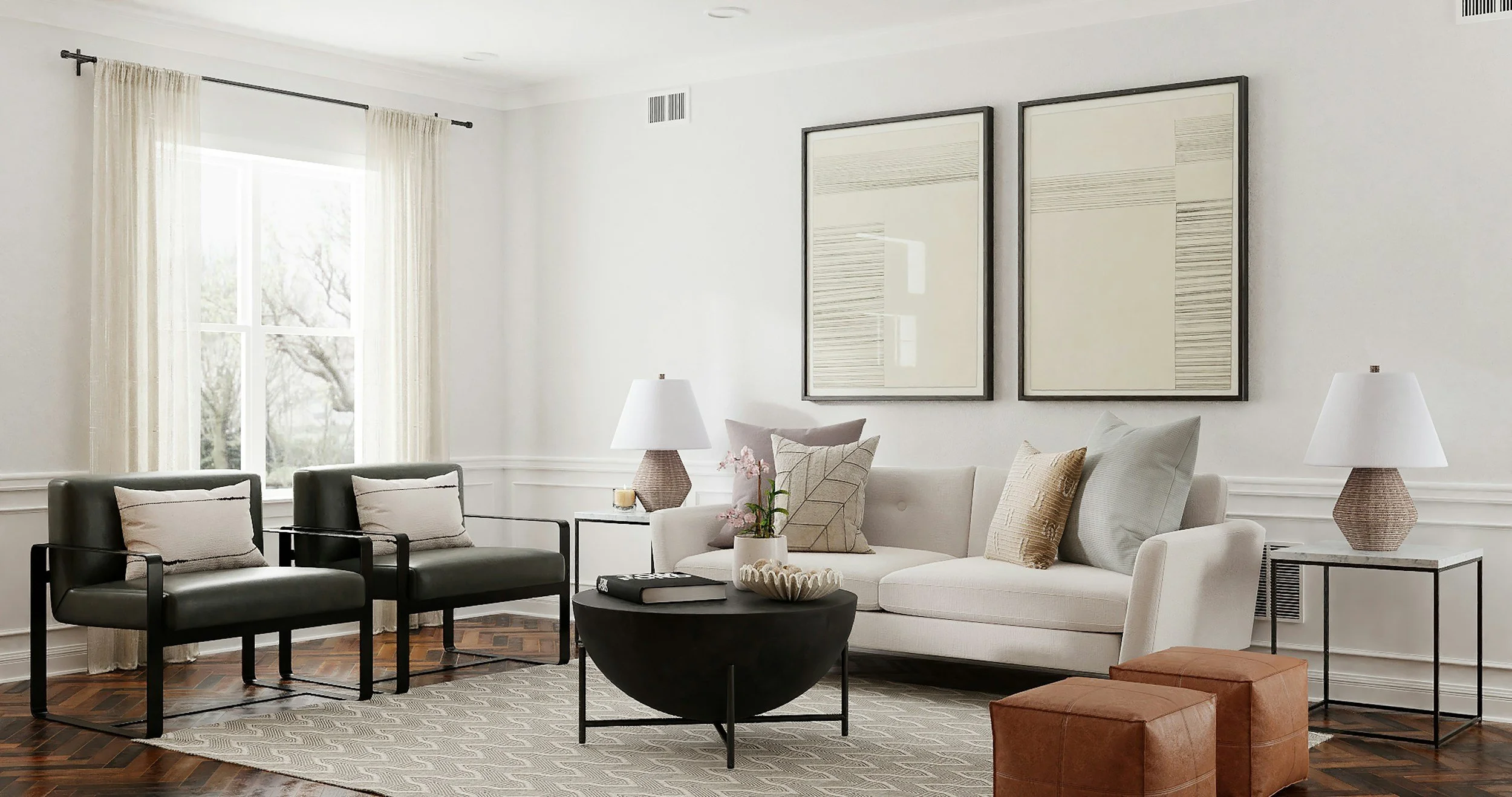
Furnished assignment-based placement is appropriate for residences configured for stable, day-to-day living and not intended for frequent turnover. Commonly suitable properties include secondary residences, professionally maintained condominiums, estate- or trust-held properties, homes transitioning between personal use and long-term leasing, and residences owned by individuals seeking limited hands-on involvement.
Properties submitted for placement are reviewed for overall suitability, including layout, furnishings, location, and compatibility with extended, non-transient residential use.
Use of Existing Furnishings
This model is intended for properties where existing furnishings remain in place. Furnishings are documented, retained, and used by a limited number of occupants over defined durations. Because occupancy is assignment-based and non-transient, furnishings are subject to fewer turnovers, reduced handling, and less wear than in short-term or vacation use. Properties are not staged, rotated, or reconfigured to accommodate transient demand.
Occupancy and Use Controls
All placements operate within defined occupancy parameters and approved residential use classifications. Use is strictly assignment-based and non-transient; short-term, vacation, event, or party use is not permitted. Occupants are placed deliberately and are expected to adhere to quiet residential living standards and applicable community rules. Start dates, duration, extensions, and exits are governed by written terms, with extensions subject to review and not granted automatically.
Compliance and Operating Standards
Properties are managed under documented compliance and operational standards governing use classification, maintenance reporting, conduct expectations, and management accountability. These standards are applied consistently across placements to reduce regulatory exposure, limit operational surprises, and preserve the property’s suitability for sustained residential use.
Maintenance and Oversight
Maintenance and issue resolution follow documented reporting and response protocols. Safety-related matters are prioritized, and routine items are addressed within established timeframes. Informal or ad hoc maintenance practices are not permitted, reducing ambiguity and protecting both the property and the owner.
Financial Clarity
Rates, inclusions, and limits are documented in advance. Utility caps and service parameters are disclosed where applicable, and billing and payment expectations are established prior to occupancy. This model avoids dynamic pricing, open-ended use, or undefined cost exposure.
Who This Model Is Not Designed For
Furnished assignment-based placement is not suitable for owners seeking nightly or weekly turnover, high-volume short-term activity, frequent personal access during occupancy, or flexible use outside defined terms. Properties operating under this model are managed for stability and control rather than yield maximization.
Next Steps
Property submissions are reviewed for suitability prior to any placement. Not all furnished residences meet the criteria for assignment-based use, and participation is intentionally selective.
Estate and Trust Addendum
Furnished assignment-based placement is commonly used for estate-held, trust-owned, or conservatorship-managed properties during transitional periods. This model allows residences to remain occupied in a controlled, non-transient manner while ownership, probate, or long-term planning matters are addressed. Existing furnishings are retained and documented, use is governed by written standards, and occupancy is limited to assignment-based residential living. This approach supports asset preservation, regulatory clarity, and reduced disruption during sensitive administrative or family-managed transitions.